

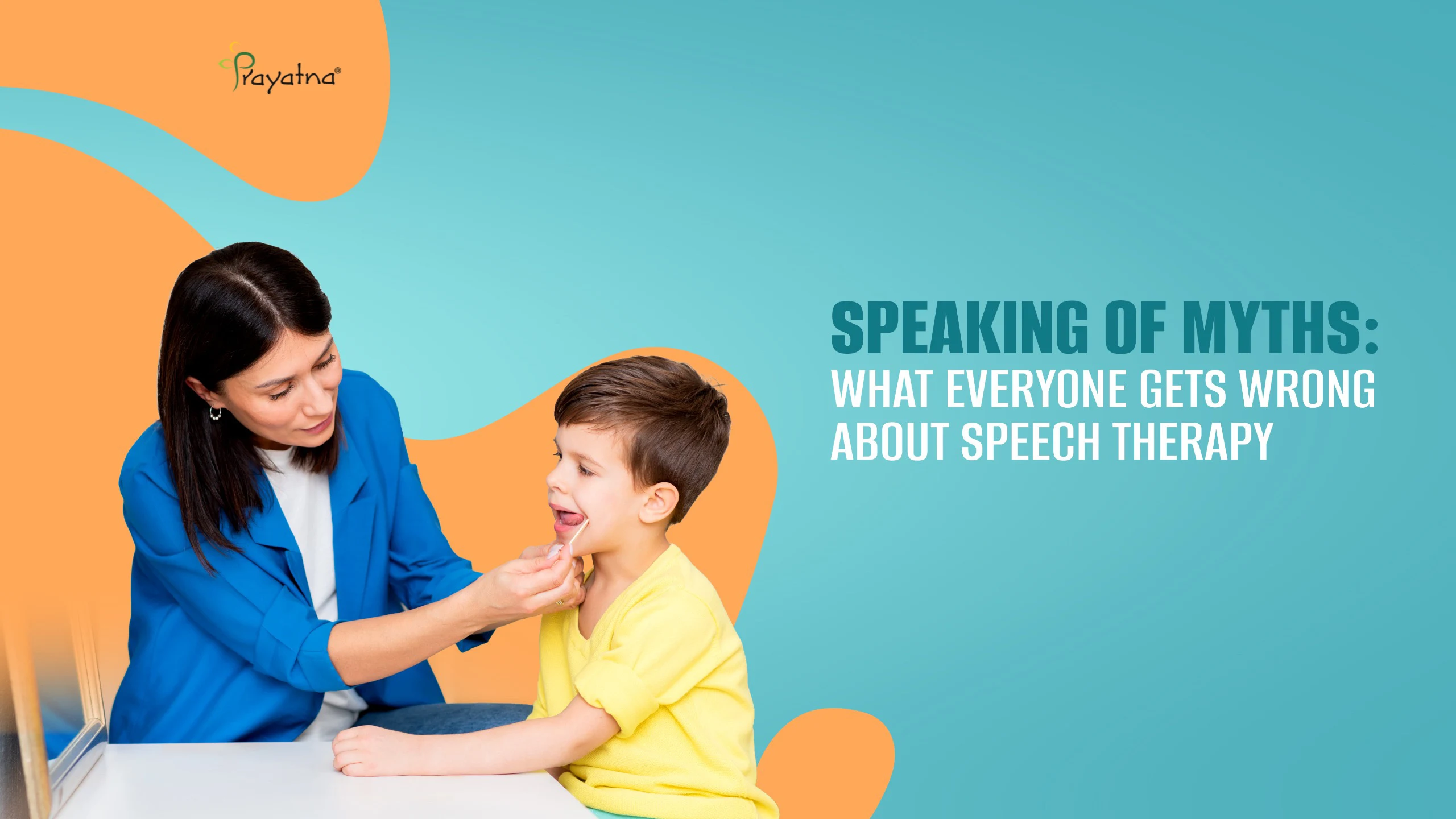
Speaking of Myths: What Everyone Gets Wrong About Speech Therapy

Introduction
Speech therapy is often misunderstood. Many parents and adults hesitate to start speech therapy or seek support because of outdated ideas and misconceptions about who speech therapy is for or what it actually involves.
A lot of the time, these misconceptions can delay people from getting help that could genuinely benefit them or their child.
In this blog, we'll go through some of the most common myths about speech therapy and explain what's actually true.
What Is Speech Therapy and Who Is It For?
Before we get into the myths surrounding speech therapy, let's have a quick refresher.
Speech therapy is professional support provided for pediatric, adult or geriatric populations who have difficulties with understanding and expressing language, speech clarity, voice, fluency, social communication, feeding, memory and cognition.
Common Myths About Speech Therapy
Myth 1: Children Will Just Grow Out of It
It's a common belief that speech and language difficulties resolve on their own with time. While some children do catch up naturally, others need targeted support to build the skills they're missing.
They might need intensive support to catch up on their language, vocabulary or social skills. The initial few years of a child’s development are essential and also the ideal time for immense cognitive and linguistic growth.
Waiting too long can sometimes make progress harder later on, especially if the child grows too frustrated or falls behind in school. An assessment can help clarify whether a "wait and see" approach is appropriate or whether support would help.
Myth 2: If Family Members Had the Same Issue, Then It's Not a Big Deal
It's common to hear something like "his dad was a late talker too" or "stuttering runs in our family, so it's normal." Because the pattern feels familiar, it's easy to assume it doesn't need attention.
When families report a history of speech delays, the difficulties passed down can vary in severity. This kind of variability matters when it comes to providing early intervention for speech and language difficulties, because a genetic predisposition does not guarantee a similar outcome in the child.
Even when a pattern seems familiar, communication difficulties can still affect a child's confidence, learning, and daily life. Research has also shown that unaddressed speech and language difficulties can contribute to later reading, writing and academic performance.
Getting an assessment can help determine what support might be useful, regardless of family history.
Myth 3: Speech Therapy Is Only for Children Who Cannot Talk
Many people assume speech therapy is only for children who are nonverbal or very hard to understand.
In reality, speech therapy covers a much wider range of difficulties. A speech therapist works on improving vocabulary, sentence formation, understanding language, swallowing or feeding difficulties, stuttering or disfluent speech, clarity issues, voice concerns, and social communication skills like holding a conversation or reading social cues.
A child or adult doesn't need to have a severe difficulty to benefit from getting support.
Myth 4: Speech Therapists Are Just Playing Games With the Children
To an outside observer, a session full of toys, games, and laughter can look more like playtime than therapy. But nothing about it is random. Every activity chosen by the speech therapist is with a specific communication goal in mind.
For young children especially, play is one of the most effective ways to teach new skills because it mirrors how they naturally learn to interact with the world around them.
A pretend tea party might be building sentence structure and turn-taking or a board game might be targeting articulation or vocabulary.
Each “game” is really a carefully designed tool wrapped in something enjoyable, which helps children stay motivated, reduces the pressure that can come with more formal drills, and makes new skills easier to retain and generalize.
Myth 5: Bilingual Children Are Just Confused, Not Delayed
Learning two languages does not cause a speech or language delay.
This myth often stems from normal bilingual patterns like mixing words from both languages in one sentence or a temporary “silent period,” neither of which signals delay.
Most research shows that bilingual and monolingual children reach language milestones at similar rates. The real risk is assessing a child in only one language, which can underestimate their true abilities.
A proper evaluation by a speech therapist helps to look at their full language profile across every language they speak.
Myth 6: Using Picture Cards or AAC Will Stop My Child From Talking
A common fear is that giving a child a communication device or picture system will make them "rely on it" instead of developing speech.
In reality, Augmentative and Alternative Communication or AAC often supports and speeds up spoken language development rather than replacing it.
It takes pressure off the child and gives them a reliable way to communicate while speech skills continue to build.
Starting AAC early doesn't mean a child is locked into using it forever, since many reduce their reliance on it naturally as verbal speech develops.
When Should Parents or Adults Consider an Assessment?
Instead of relying on assumptions, it can help to look out for signs such as:
- Difficulty being understood by others
- Trouble following instructions or understanding language
- Frustration when trying to communicate
- Communication challenges affecting school, work, or relationships
- Ongoing concern from a parent, teacher, or the individual themselves
A speech therapist can assess these concerns and offer guidance on next steps.
Frequently Asked Questions About Speech Therapy
Is It True That Speech Therapy Isn't Needed if a Child Seems to Understand Everything?
Not necessarily. Understanding (receptive language) and expressing oneself (expressive language) are different skills, and a child can be strong in one and still need support in the other.
Does Starting Speech Therapy Mean Something Is "Wrong" With My Child?
No. Speech therapy is simply targeted support to help build specific skills — it doesn't reflect a child's overall intelligence or potential.
Can Speech Therapy Help Adults, Not Just Children?
Yes, speech therapy supports adults with a wide range of speech, language, voice, and communication needs.
Is It Too Late to Start Speech Therapy at an Older Age?
It's rarely "too late". Progress is possible at different ages, though goals and the approach may differ.
Will Therapy Guarantee My Child Speaks Perfectly?
No approach can guarantee a specific outcome, but speech therapy can support meaningful progress over time.
Conclusion
Misconceptions about speech therapy can sometimes stop people from seeking support that could genuinely help.
Understanding what speech therapy actually involves and who it's for makes it easier to make an informed decision.
If you have concerns about your own or your child's communication, speaking with a qualified speech therapist can help clear up any doubts and outline the right next steps.
Not sure if speech therapy is the right fit? Speak with our team to find out whether a consultation or assessment may help.
